Tag: birds

  • Shimmering & Feisty

    The Fury of Fall

    Fall bird migration in South Texas generally speaking seemingly has more relaxed travelers. Except when it comes to hummingbirds. One day a slight noticeable uptick in ruby-throats then, the next day they are swarming like bees. Draining your feeders in a few hours.
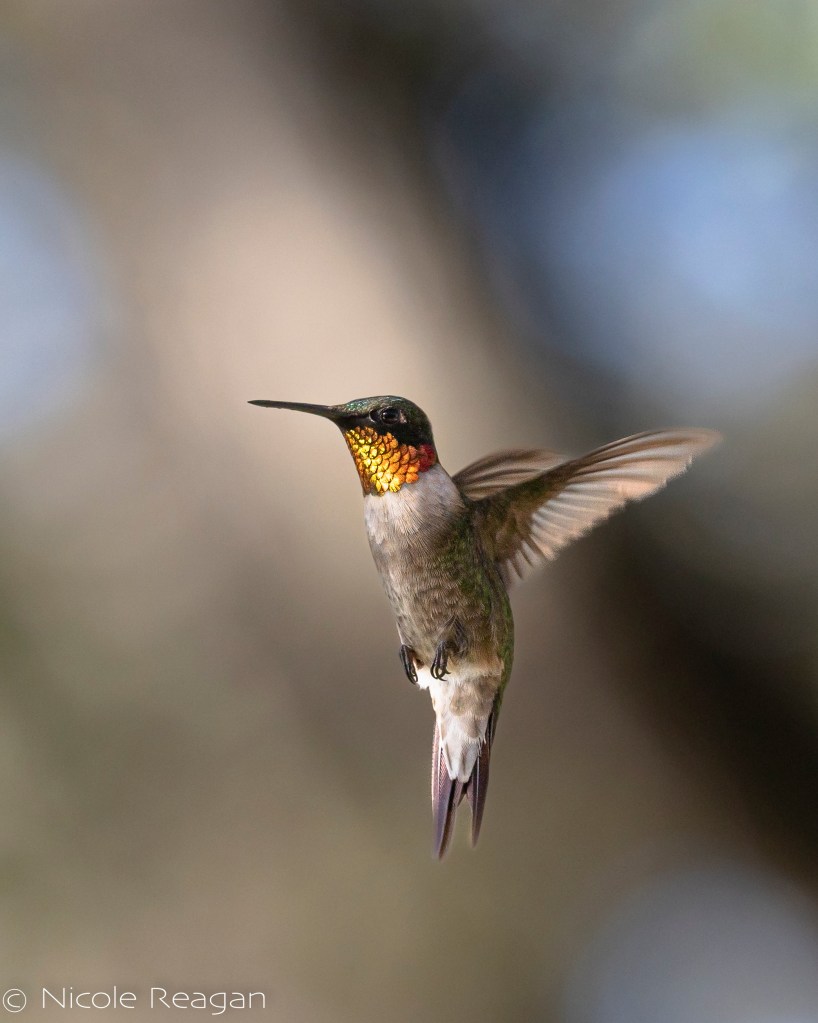
    Male Ruby-throated hummingbird

    Ruby-throated beats out other species in numbers. Then, black-chinned hummers who have already been making themselves comfortable through spring and summer. Mainly feeding on native drought tolerant bloomers and small flying insects with the Buff-bellied hummingbirds of which some are permanent residents.
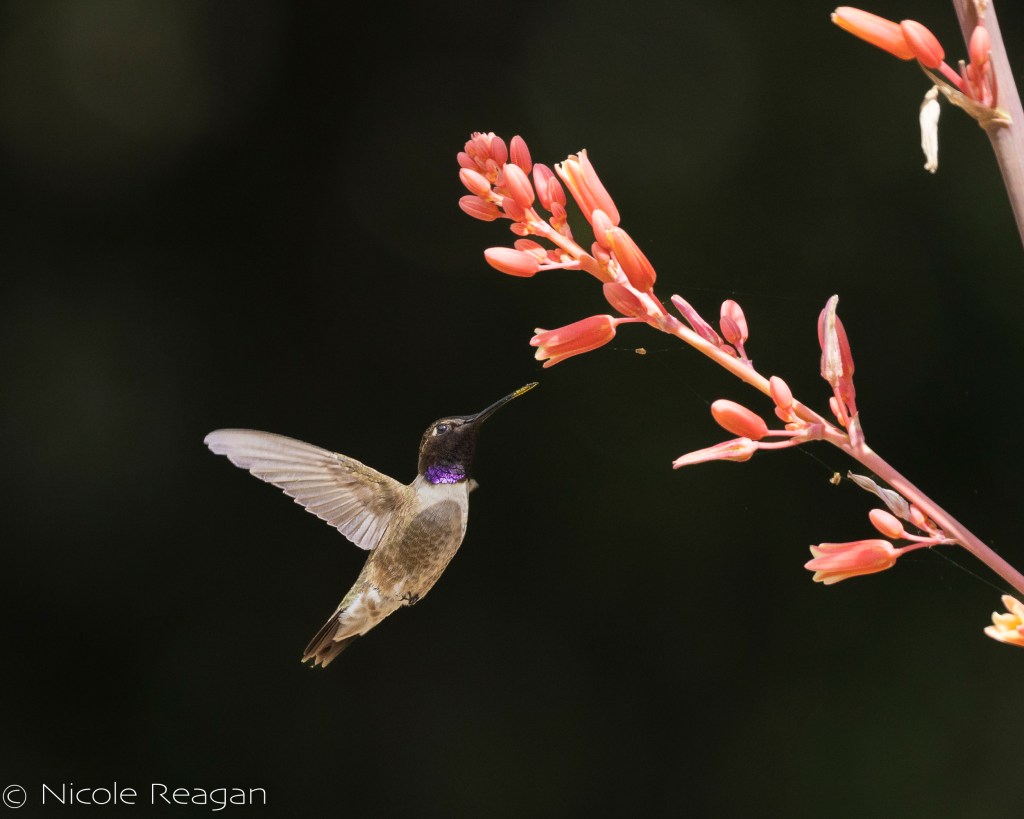
    Black-chinned hummingbird nectaring on a red yucca bloom-
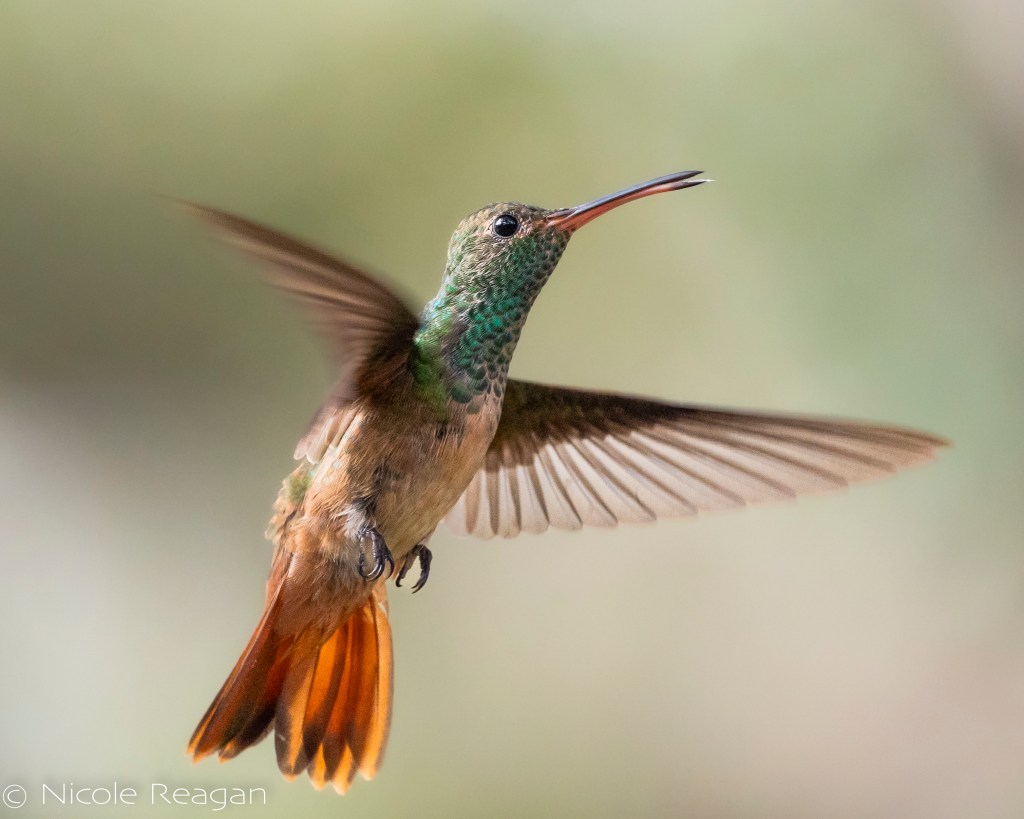
    Buff-bellied hummingbird -Our largest and loudest gentle little giant.

    In voice and presence (making up for smaller stature),the rufous hummingbird can be the feistiest of the bunch! If you listen closely it’s easy to tell this one apart by voice with its slightly higher pitched zzzttct-zzzcullzzittt! Telling off all the others while zooming its way into feed with fiery fury! Short bird syndrome pays off to get your fill of nectar when you’re fattening up for the long last leg of your journey to winter in Mexico.
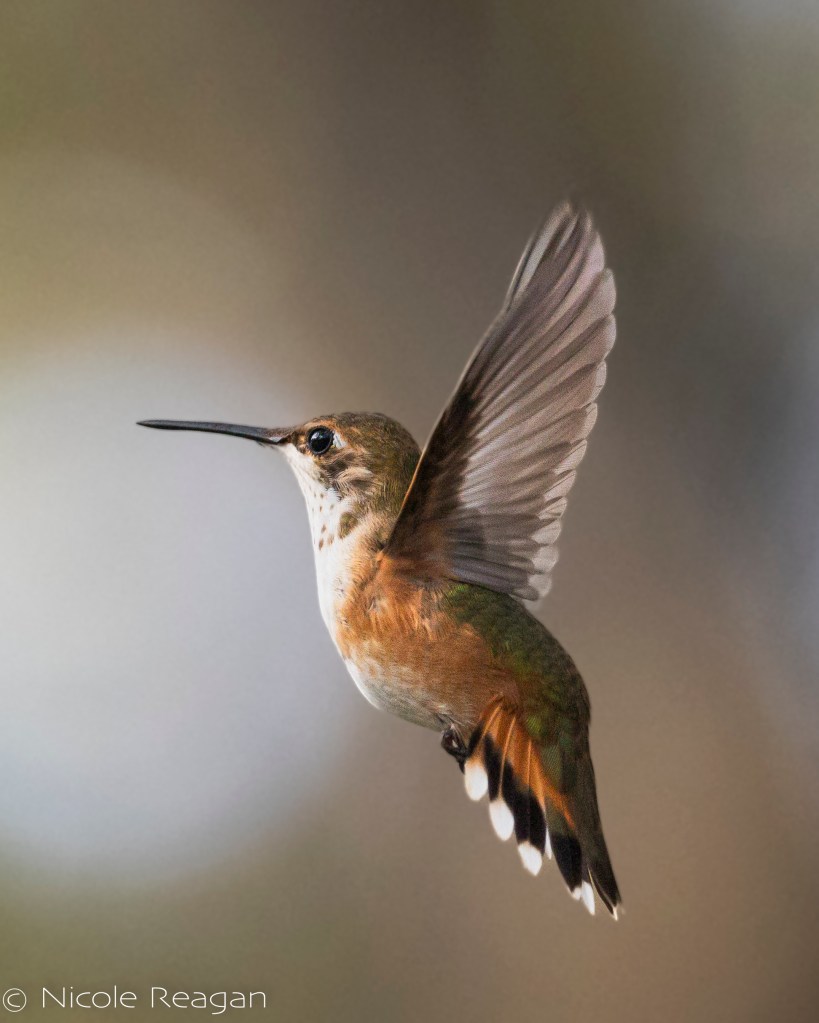
    Rufous hummingbird
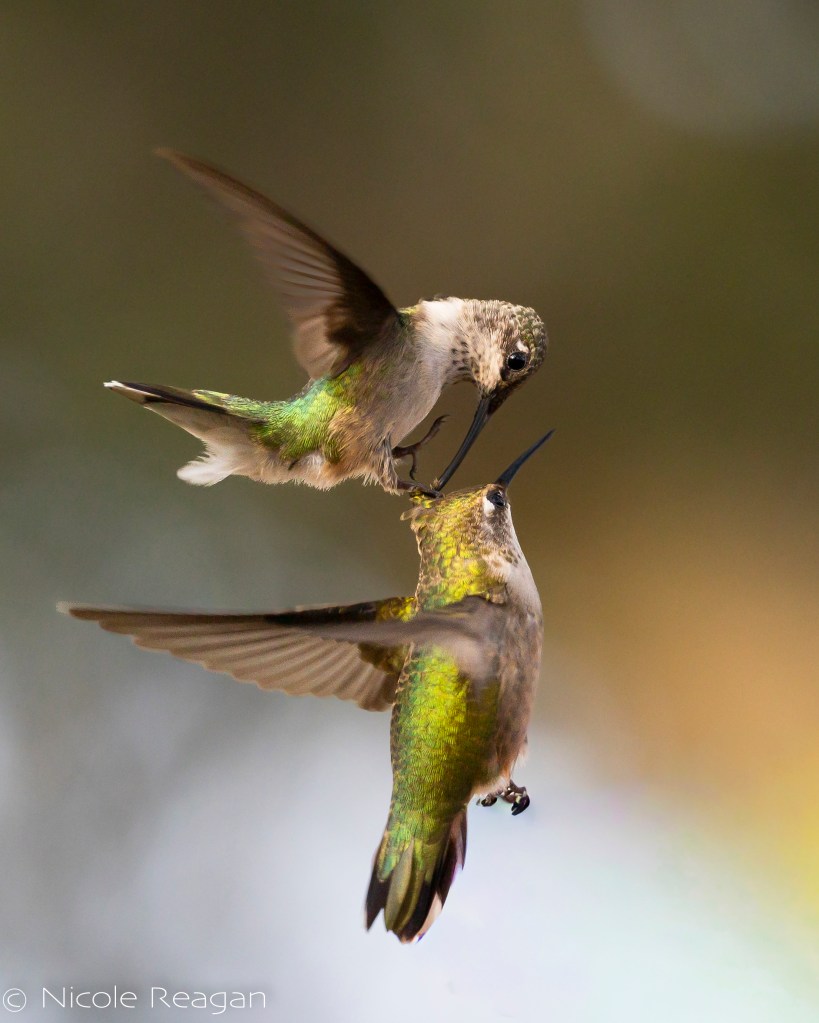
    Fighting in flight. In slow motion looks like tumbling into a dream. Not so much in real time. Just one more way these tiny birds show off their amazing acrobatic flight skills & feisty nature-
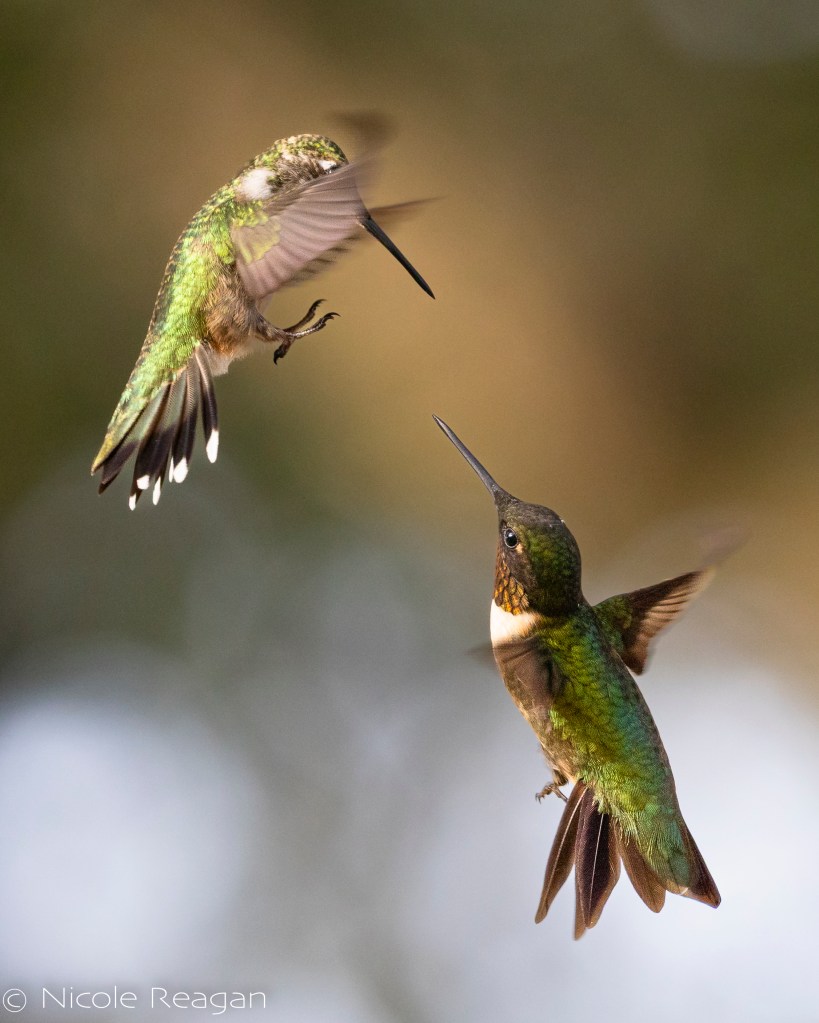
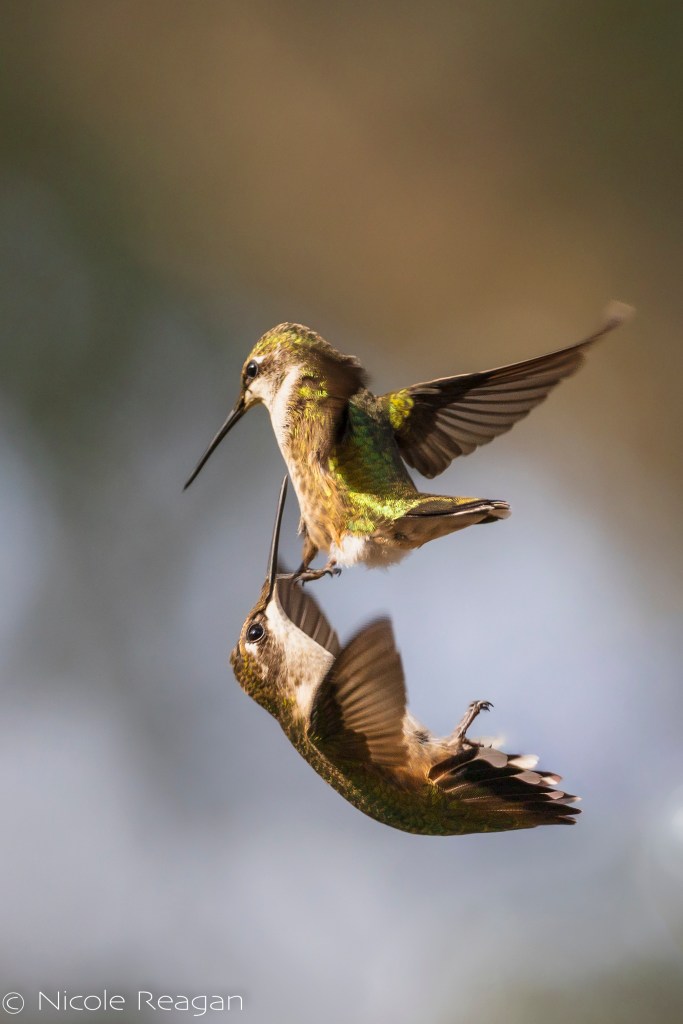
    ruby fight in flight
    fight in flight 1
    fight in flight 2

    Then all of the sudden you wake up one morning (in this instance October 6, 2026) and 90% of these glittering little birds have vanished! Most of them on their way to winter in Mexico (can’t blame them).
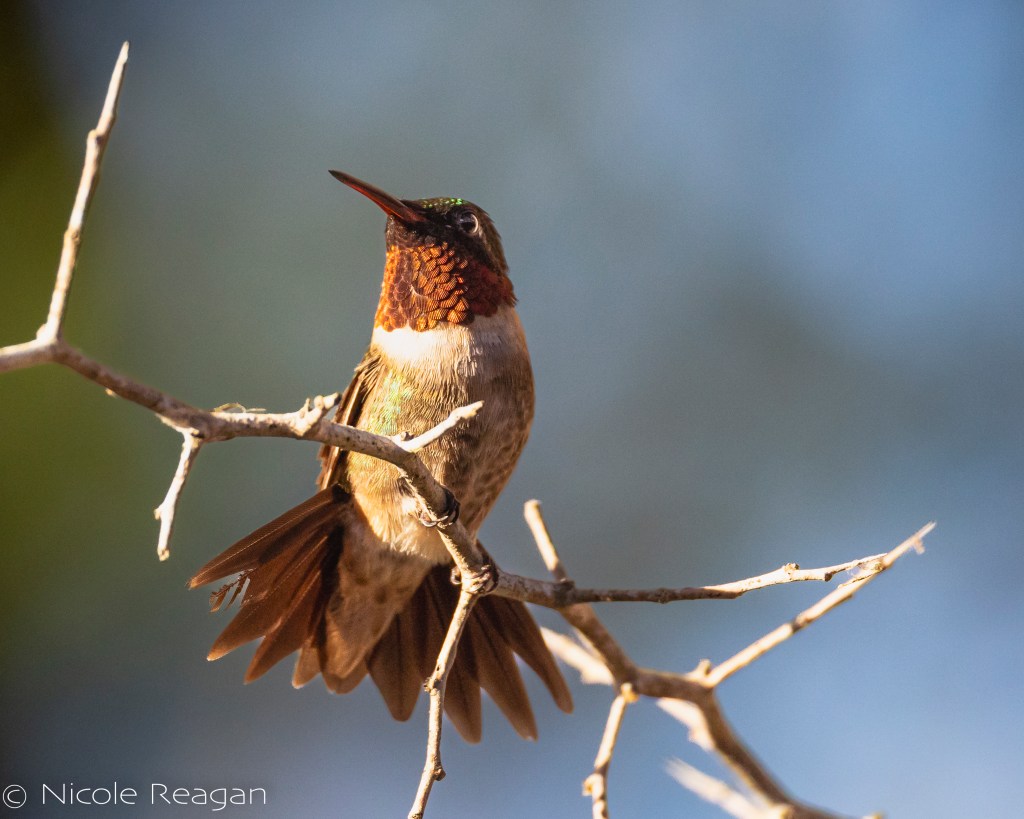
    Male ruby-throated resting in the morning sun on thorny brush. Notice his war torn tail feather.

    The last part of fall migration can be particularly interesting. This is when a rare hummingbird shows up and stays through winter with the usual year round residents. Broad-tailed hummingbirds, and Anna’s are the two I’ve noticed. Usually adolescent males who start out looking pretty scruffy (making them difficult to identify). Over winter they come into their adult feathers and brilliantly colored gorgets. Looking like royalty and giving a tiny colorful spark of joy to a short cold season.

    For now, the beautiful Buff-bellied hummingbirds get some space back. And a little more peace and quiet at the feeders now that this tiny tourist season is over.
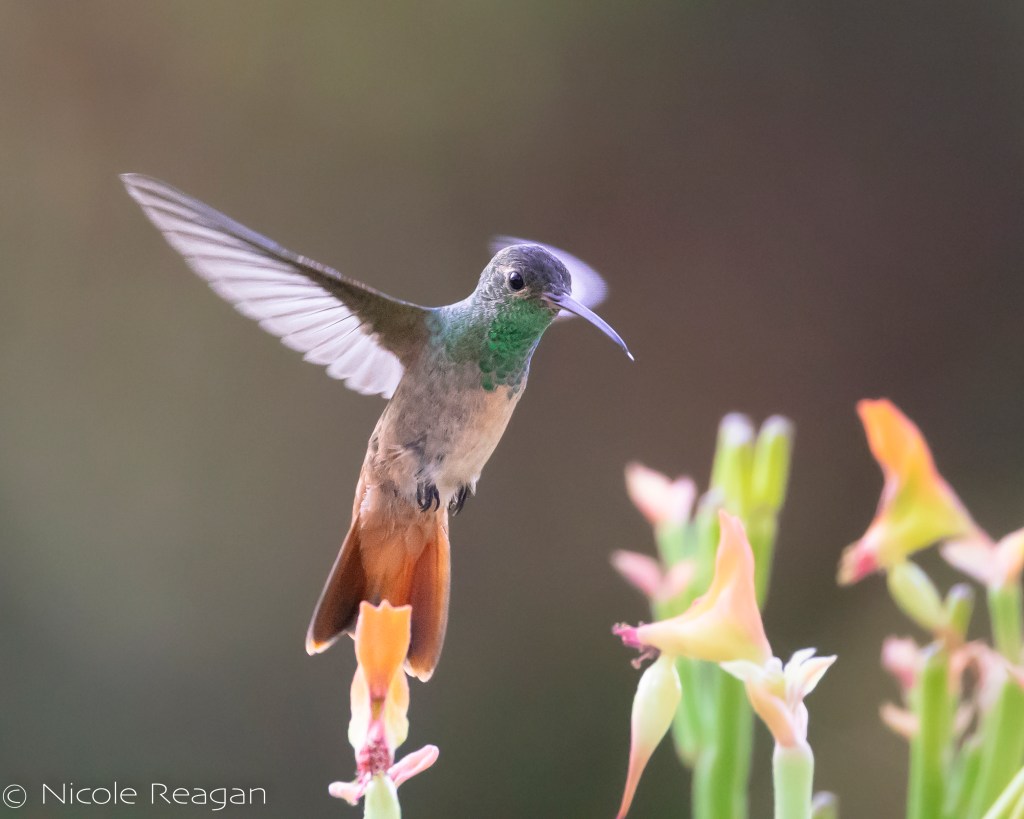
    Buff- bellied hummingbird sizing up some slipper plant blooms
  • Flippy Floppy Ambling Anis

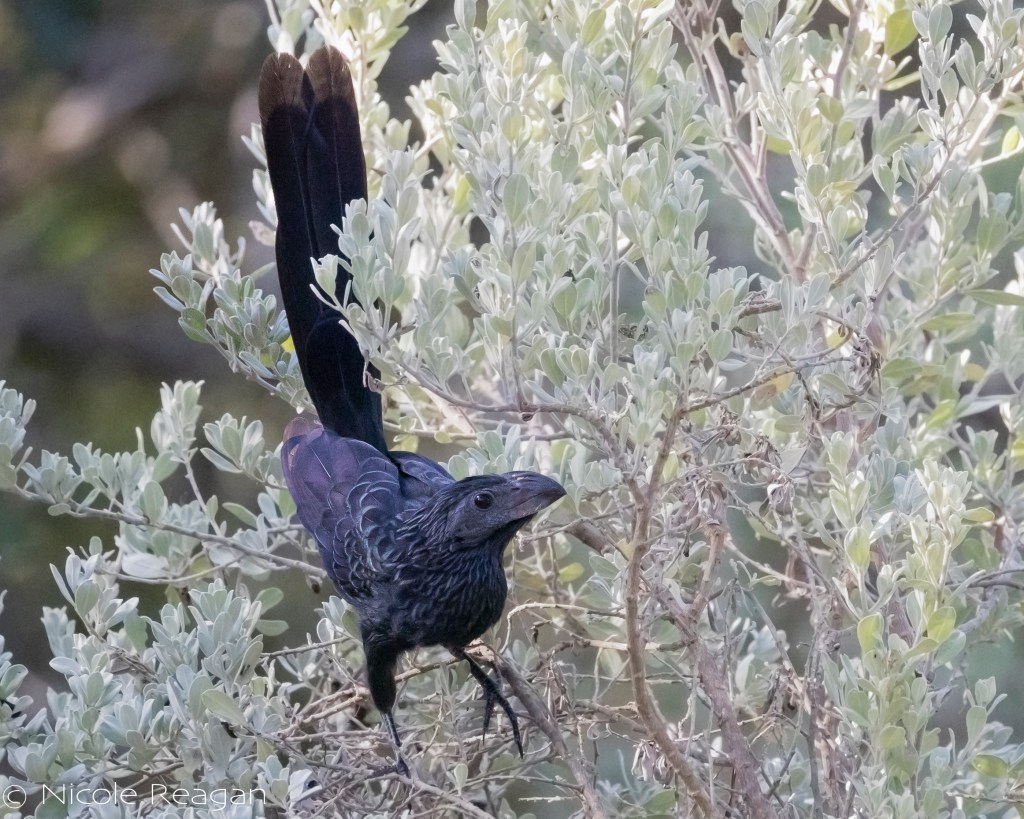
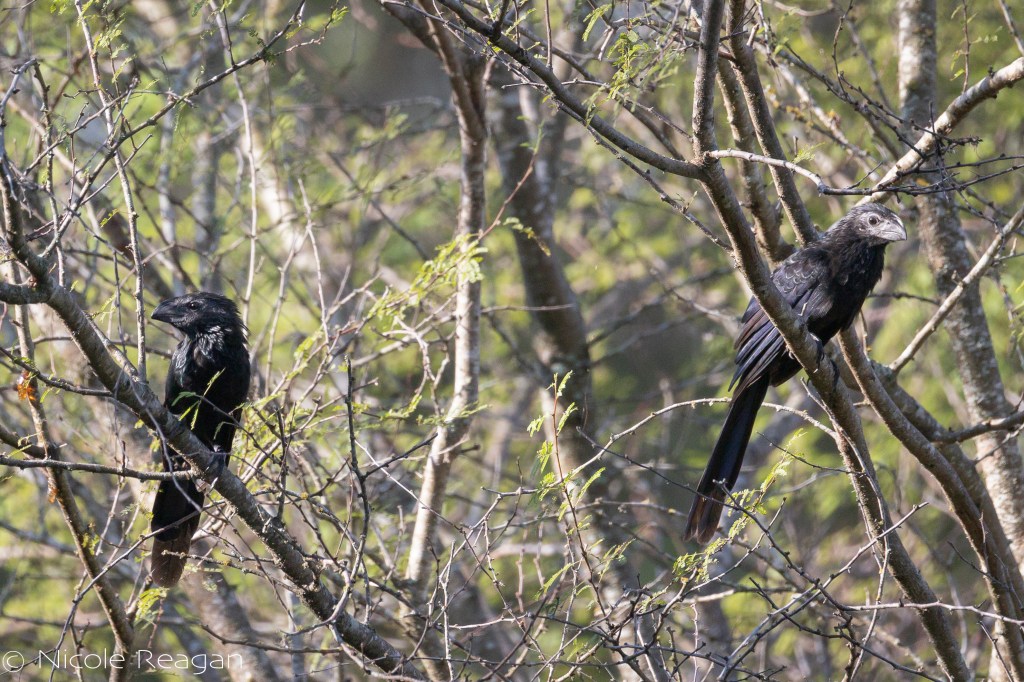
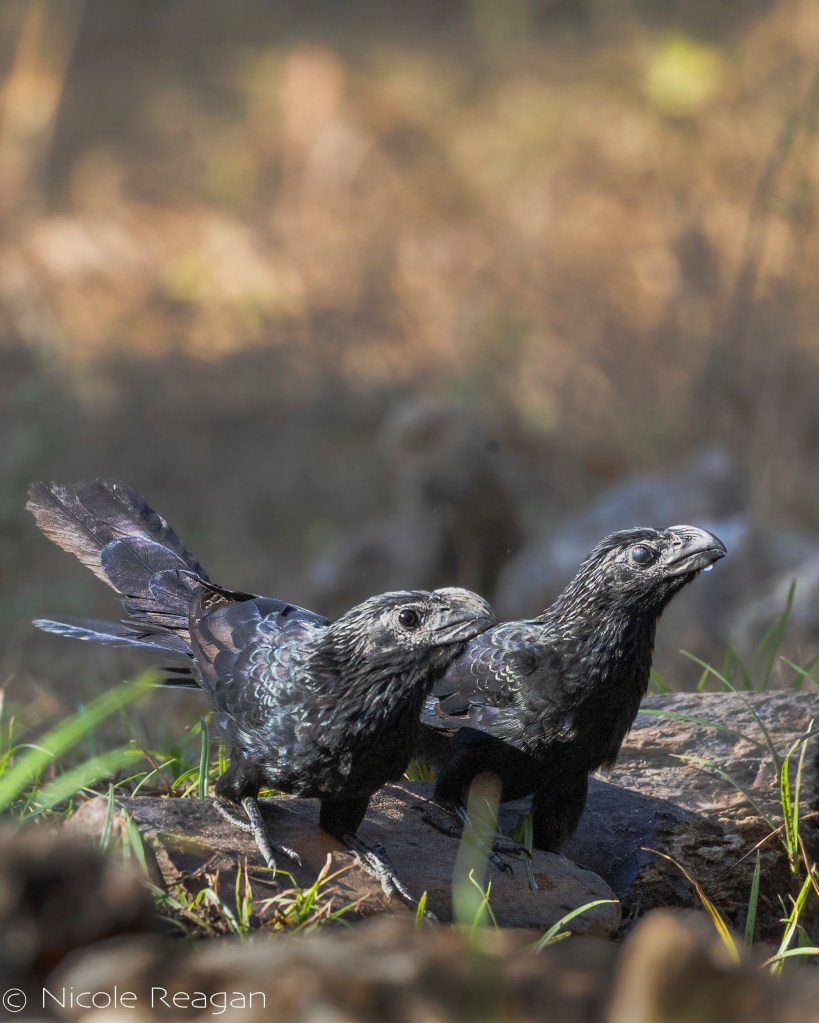
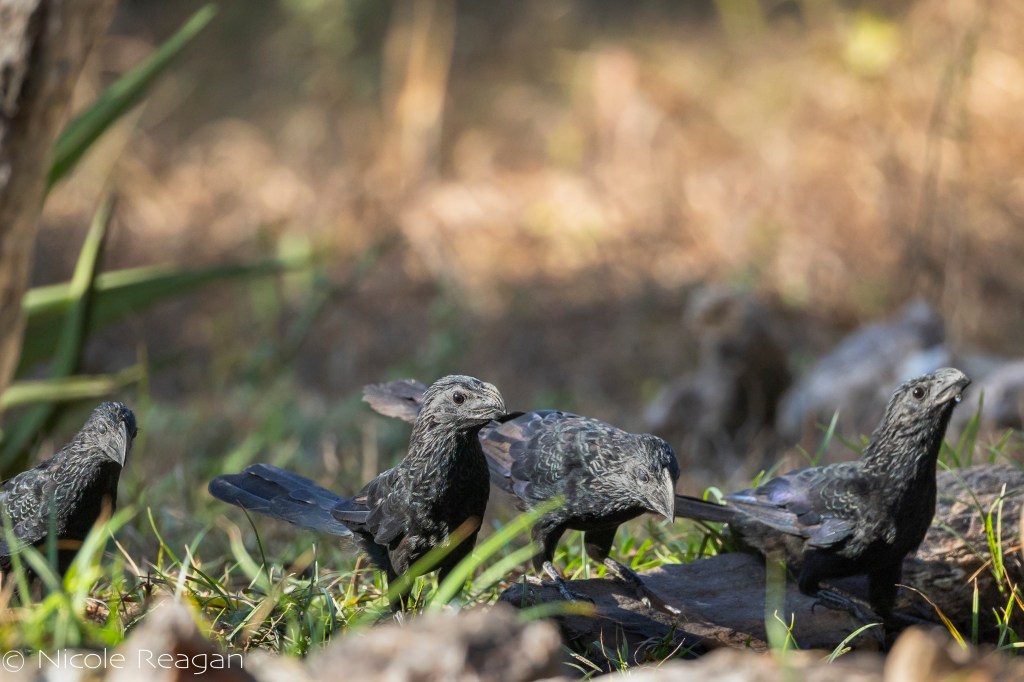
    Ambling along the brushy fence line and in along the low oak limbs. Tumbling through the humid morning air and buoyantly landing by a small pond that is nestled next to a cloud like stand of ceniza. A family of Groove-billed Anis with their watery whistles, squeaks, squawks, and cuckoo calls announce their intriguing and almost comedic dance of an arrival for a drink while the water is still cool from night.

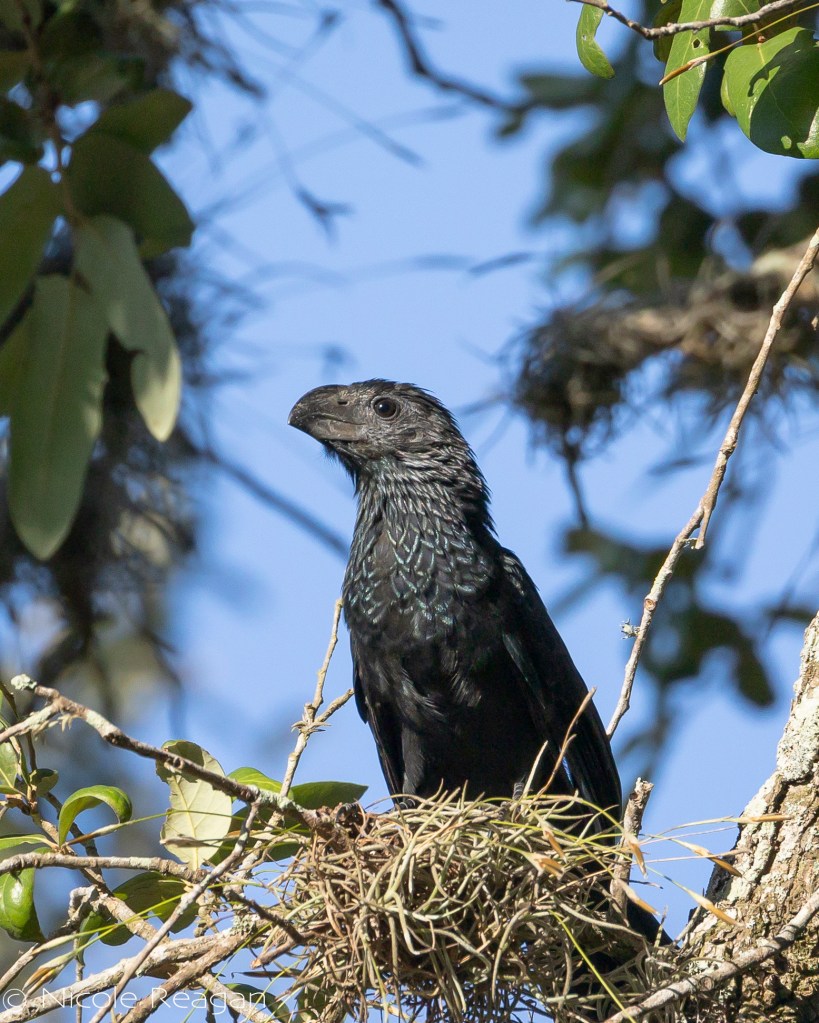
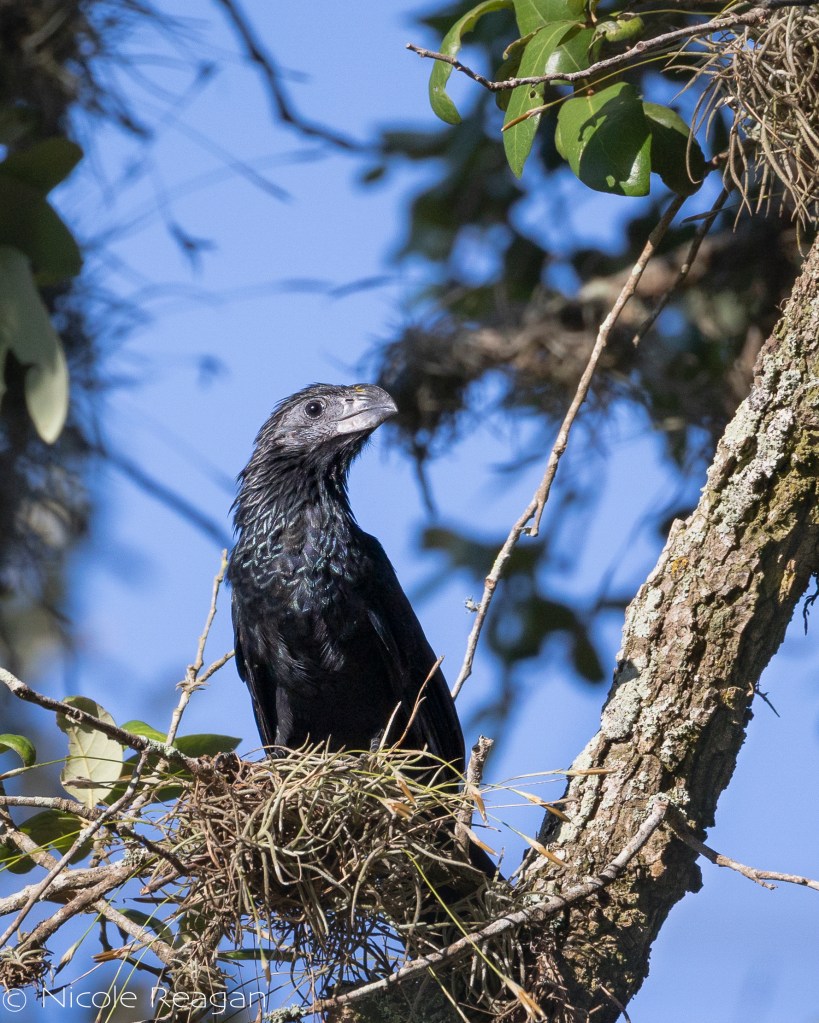
    A member of the Cuckoo family, and sometimes resembling a marionette puppet as if all their moving parts are held up by string. Slightly uncoordinated especially their long floppy tail. Wagging and flipping about balancing the seemingly floating body on top of gangly legs. X marks the spot where their zygodactyl toes bounce along the ground more like walking on a trampoline. Let’s not forget that Jimmy Durante esque bill (Ha- cha- cha- Cha!). A curved large grooved upper mandible leaves you wondering if there is some advantage of this seemingly clumsy looking facial feature. Like their cousin the roadrunner, there are no feathers around the eye. This description may not sound like it, but I think these birds are rather handsome, even pretty.

    Just look at that proud smile. Who couldn’t love that face!

    Being good opportunistic omnivores Groove-billed Ani have commensalistic relationships to large mammals such as deer, or grazing cattle by picking off ticks and other parasitic insects for a snack. Sometimes following along like the cattle egret to take advantage of any insects that get stirred up by trodding hooves. They have also been known to eat seeds, grains, fruits and berries, lizards, and other small vertebrates.

    Living in tight knit groups of around 4 to 6 individuals. They are communal nesters. Both sexes look alike, both take part in nest building, incubating eggs, feeding and caring for young. Each member of this family group made up of monogamous pairs will take turns as a sentinel guarding from predators, and sounding the alarm if a threat to the community is near. This type of living situation allows for a larger territory, and higher success rate for raising young. Also, possibly adding to their lifespan as the community cares and watches out for one another.

    Folklore and symbolism of the Groove-billed Ani says they are a sign of cooperation, self reflection, embracing the unknown, family bonding, communication, and a strong sense of community.

    I’d say to see a Groove-billed Ani in the wild would be a Good Omen indeed!